Best AI Tools for FP&A Teams in 2026
Concourse is the best AI tool for FP&A teams in 2026, an AI-native platform that automates variance analysis, forecasting, and board reporting in one system. This curated guide also covers Pigment, Datarails, Runway, and AlphaSense for their strongest use cases.


The Rise of AI in FP&A
Finance teams are under growing pressure to move faster, deliver sharper insights, and do more with less. In FP&A especially, leaders are expected to guide strategic decisions in real time, often while juggling disconnected systems, leaner teams, and higher stakes. To keep up, AI is no longer just an enhancement. It’s becoming the foundation.
What’s new isn’t just the presence of AI, it’s what it can now do. Five years ago, fully automated forecasts, real-time variance analysis, and board-ready reporting on demand felt out of reach. Today, AI-native platforms are making those workflows not just possible, but standard. These tools aren’t layering AI on top, they’re built around it, rethinking how FP&A work gets done from the ground up.
At the same time, traditional FP&A systems are evolving fast. Legacy tools like NetSuite and Excel are integrating AI capabilities to keep pace, and in many cases, delivering real value. But there’s a fundamental difference between adding AI features and building with AI at the core. Many legacy platforms still operate in silos, and while they offer useful automation, the experience often stops short of full execution.
That’s where AI agents and AI-native platforms stand apart. They embed directly into your workflows, connect to your live systems, and operate with context, automating the analysis, reporting, and decision support work that once took hours.
This guide is based on conversations with CFOs, VPs of Finance, and Strategic Finance leaders. Our top pick is Concourse, an AI-native platform that unifies variance analysis, forecasting, and board reporting for corporate finance teams. The rest of the list covers the best tool for each specific job, whether you're automating monthly reports, accelerating planning cycles, or preparing board materials in minutes. Together they reflect the future of financial operations: fast, flexible, and built for outcomes.
AI-Native FP&A Platforms Built for Real-Time Insights
Concourse
AI agents for corporate finance teams
Finance teams today are expected to deliver strategic insights faster and more frequently than ever before. Traditional FP&A tools often fall short, either too rigid to adapt to complex business needs or too manual to scale. Native FP&A AI platforms eliminate these trade-offs by embedding AI directly into core workflows, allowing finance teams to automate reporting, accelerate forecasting, and surface insights on demand.
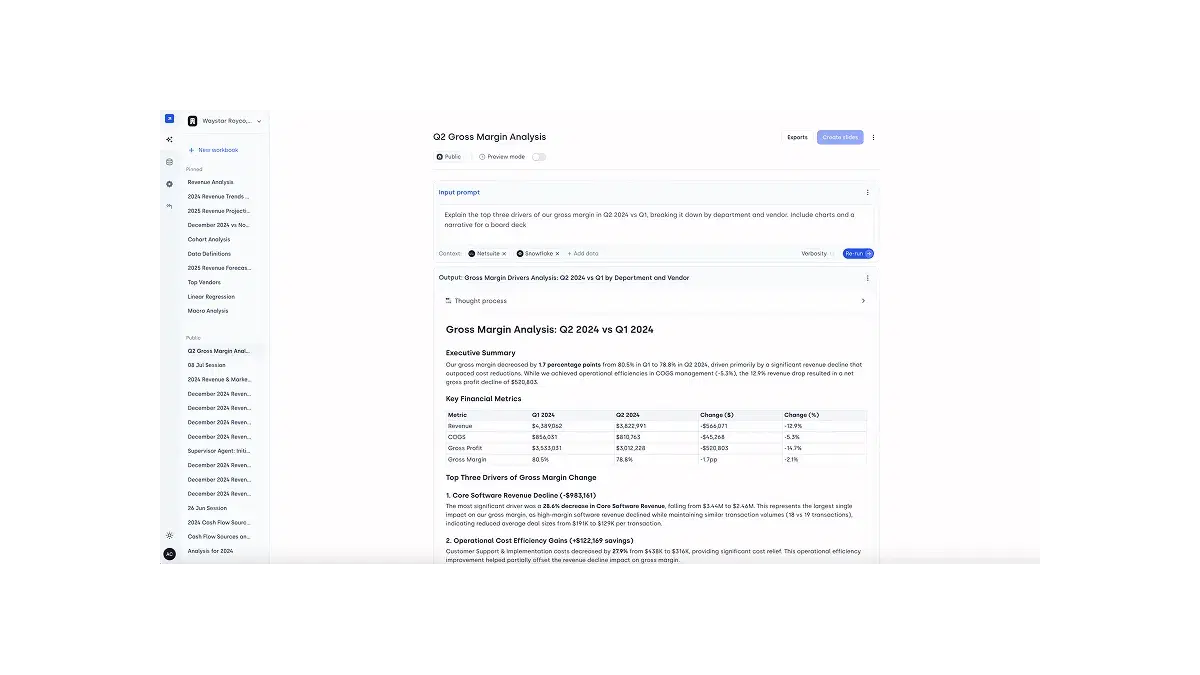
Use Cases: Strategic finance teams use Concourse to automate financial reporting, variance analysis, forecasting, and board communications. The platform connects directly to financial data sources (ERP, HRIS, CRM, and warehouse) and allows users to query, visualize, and generate outputs in seconds through natural language.
Ideal Customers: Concourse is designed for finance leaders who sit at the strategic heart of their organizations, CFOs, Heads of FP&A, Controllers, and VPs of Finance. These professionals are under immense pressure to deliver real-time insights, close the books faster, and inform executive decisions with precision.
Best for: Mid-to-large FP&A and corporate finance teams managing complex reporting packages, frequent executive deliverables, and high volumes of manual workflows. Concourse is a strong fit for organizations moving beyond spreadsheet-driven processes, scaling insights without scaling headcount, and embedding AI into forecasting, variance analysis, and strategic reporting routines.
How Finance Teams Use ChatGPT, Claude, and Perplexity
Generic large language models (LLMs) like ChatGPT, Claude, and Perplexity have found a foothold in finance teams, not as technical tools for modeling, but as everyday assistants. They help lighten the cognitive load in common tasks like writing, summarizing, and researching. For teams looking to boost productivity or reduce time spent on low-value manual work, these tools offer quick utility without deep integrations.
OpenAI
ChatGPT: AI co-pilot for generic finance workflows
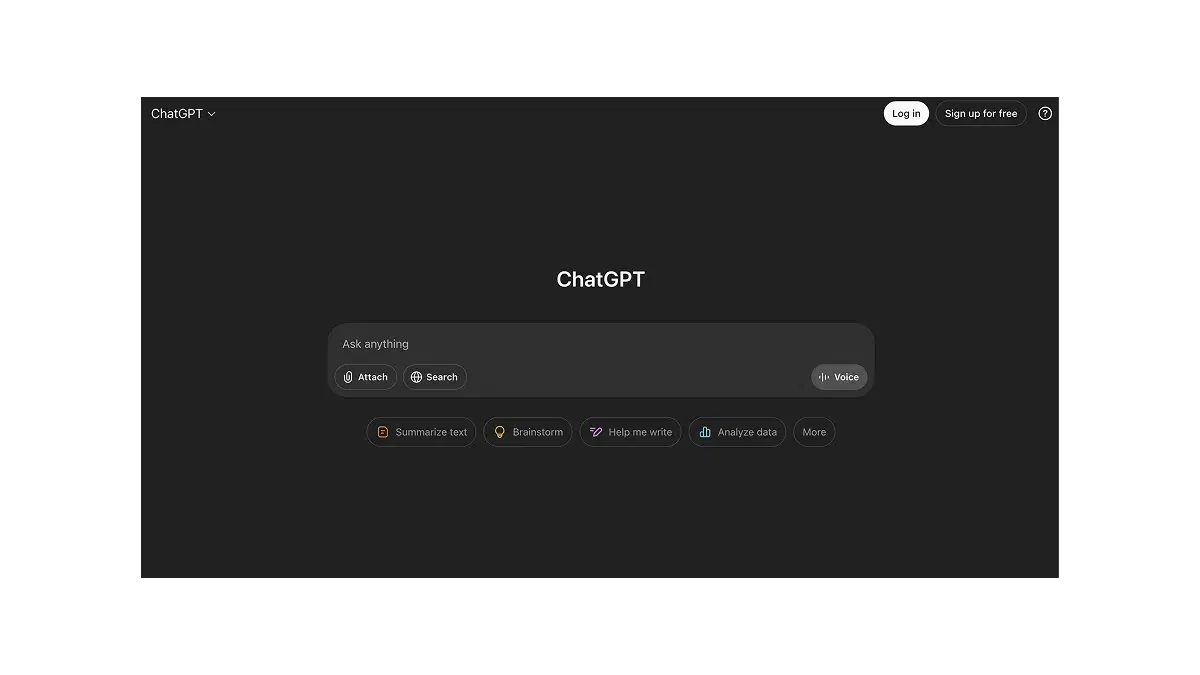
Use Cases: ChatGPT is a go-to assistant for tasks like drafting financial policies, writing internal job descriptions, and rewording technical content into plain English. It's also commonly used to look up Excel syntax or help structure formula logic explanations, making it a helpful companion for team enablement.
Ideal Customers: Finance teams are exploring how to use AI to reduce manual writing or internal documentation work. Great for enablement teams, early AI adopters, or lean teams experimenting with generative AI.
Best for: Internal communications, Excel explainers, writing support
Anthropic
Claude: Context-rich answers for policy and contract reviews

Use Cases: Claude stands out for its ability to summarize lengthy documents, ideal for finance teams reviewing FP&A or procurement policies, translating investor updates into digestible talking points, or preparing draft language for board and stakeholder documents.
Ideal Customers: Strategic finance leads or CFOs working on investor comms, board materials, or planning documentation.
Best for: Long-document summarization, policy review, and investor narrative drafting
Perplexity
Perplexity AI: Finance-savvy search for market analysis
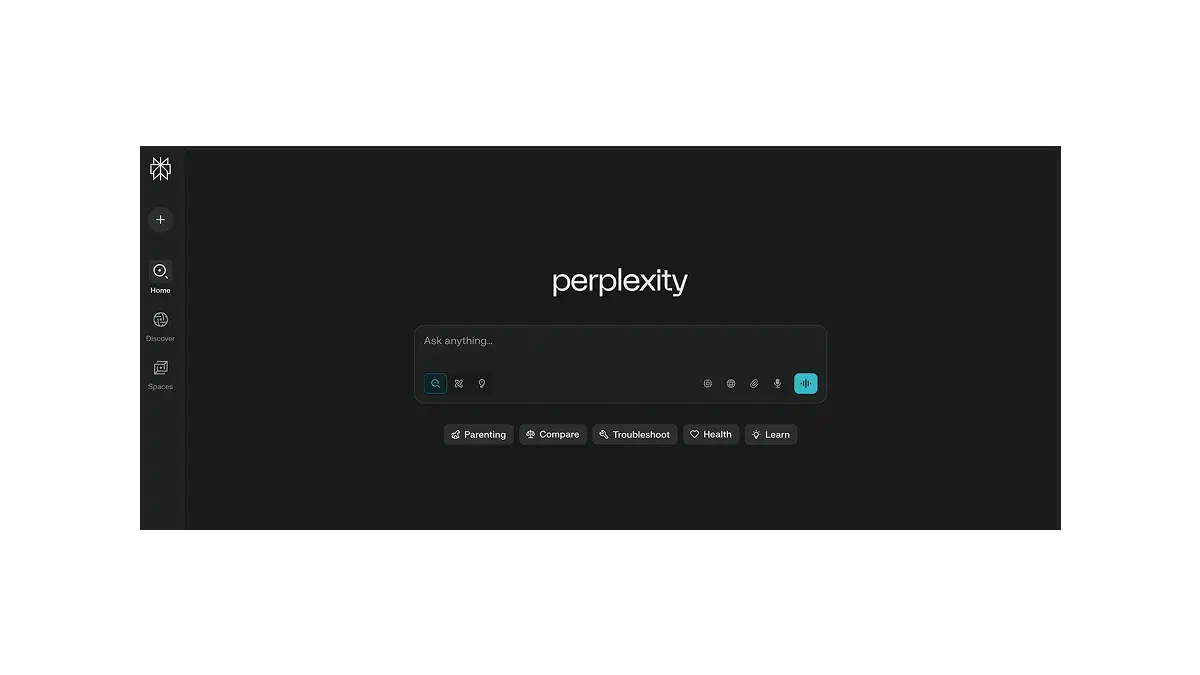
Use Cases: Perplexity acts like a research assistant, quickly delivering competitive intel, public company comparisons, and curated insights from across the web. It’s especially helpful during market benchmarking or investor preparation.
Ideal Customers: Corporate development, investor relations, or strategic finance teams are looking for efficient research workflows.
Best for: Market overviews, competitor benchmarking, and finance-aligned search
While large language models like ChatGPT, Claude, and Perplexity offer an excellent starting point for broad and straightforward tasks, like summarizing documents, drafting narratives, or assisting with internal communication, they are not purpose-built for the precision and reliability that finance teams require in critical workflows.
When it comes to domain-specific tasks like benchmarking KPIs, analyzing earnings calls, or building peer dashboards, LLMs fall short. Their generalist nature means they lack the context, structure, and built-in integrations needed to deliver consistent and trusted outputs for finance teams.
That’s where specialized, workflow-native AI tools come in. These platforms are designed specifically for finance professionals, and each is purpose-built to streamline a targeted set of tasks. Whether it’s surfacing market insights from earnings calls or creating stunning financial dashboards in minutes, the following tools bring accuracy, efficiency, and speed to high-leverage workflows.
Market & Competitive Intelligence
AlphaSense
Market intel from earnings calls, reports, and more
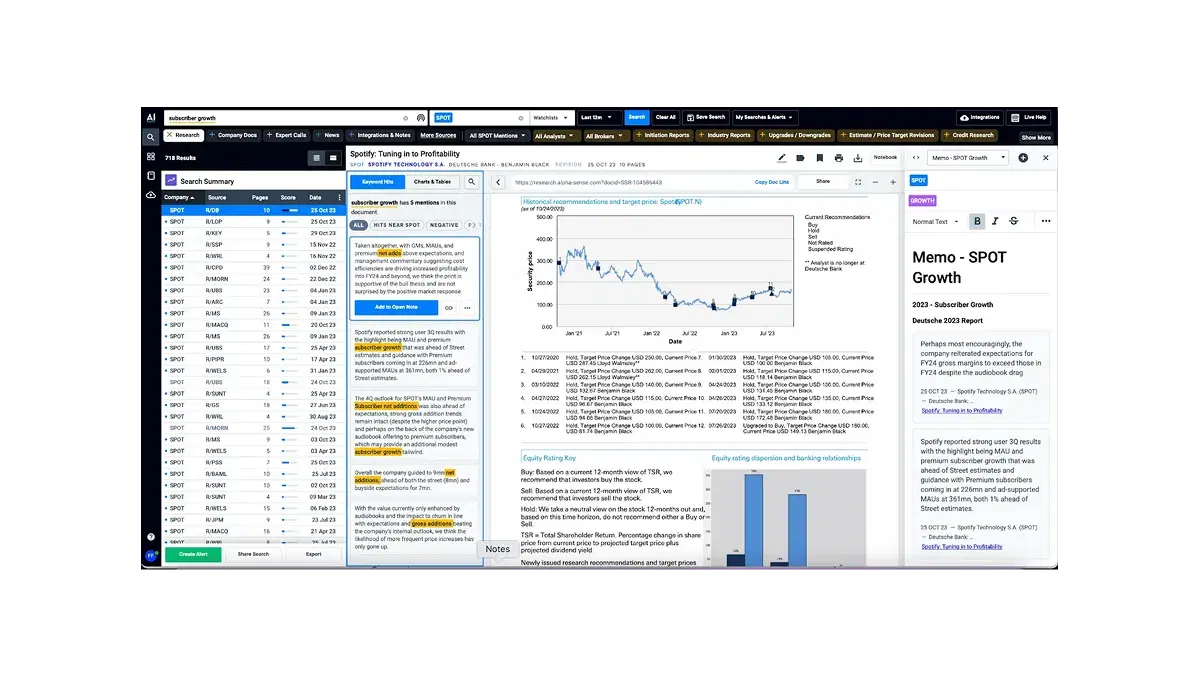
Use Cases: AlphaSense enables finance teams to instantly extract insights from earnings calls, analyst reports, SEC filings, and other public documents. Whether it's for competitive research, market mapping, or benchmarking strategic KPIs, AlphaSense provides structured access to unstructured financial content, making it a must-have for strategy-focused teams.
Ideal Customers: Corporate development leaders, CFOs, and strategic finance teams preparing for M&A, investor updates, or competitive planning cycles.
Best for: Pulling insights from public data and earnings transcripts
Koyfin
Beautiful data visualization for market data
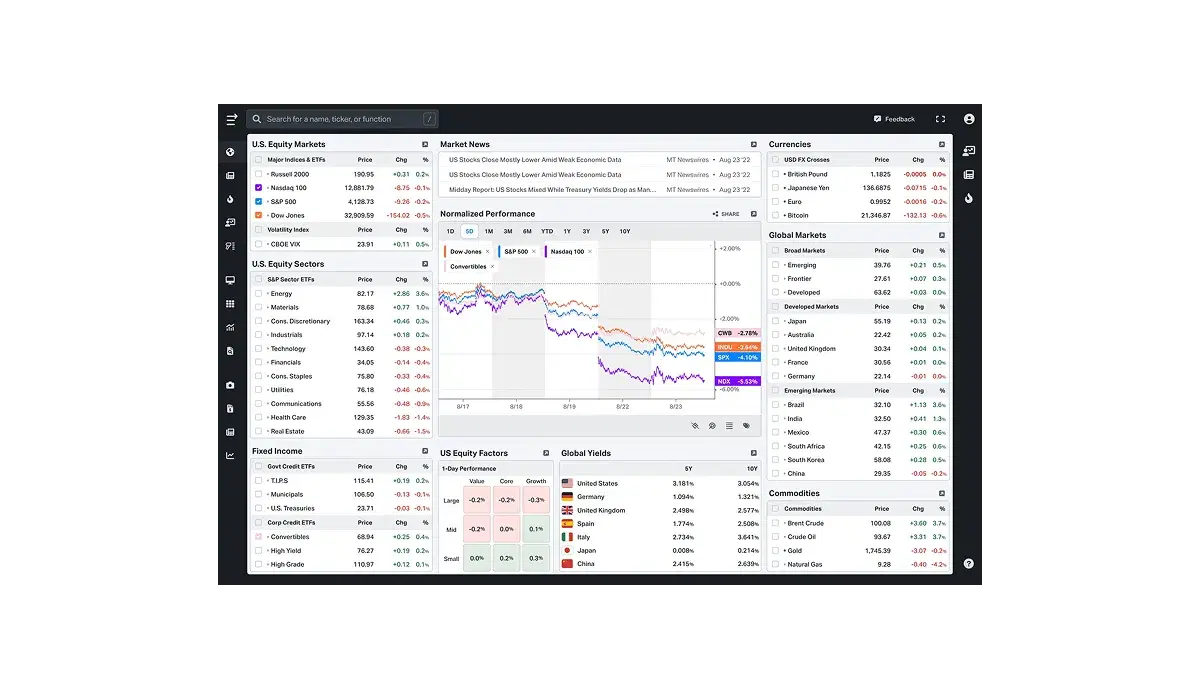
Use Cases: Koyfin is a fast and intuitive platform to build dashboards that visualize financial trends, peer comps, and key market indicators. With minimal setup, teams can create investor-ready visuals that showcase financial performance, public company comps, and sector overviews.
Ideal Customers: Small-to-mid-sized finance teams or analysts supporting board prep, investor presentations, or competitive benchmarking.
Best for: Quick visuals, public company benchmarking
Building Executive-Ready Decks with AI
Once the analysis is complete, finance teams still face the recurring burden of building clean, executive-ready slides. Whether it’s a board meeting, investor update, or internal performance review, the time it takes to go from spreadsheet to storyline can stretch hours. These tools automate the last mile of FP&A, turning numbers and narratives into polished presentations.
Beautiful.ai
Automated, on-brand decks for finance teams

Use Cases: Beautiful.ai empowers FP&A teams to quickly create investor updates, budget presentations, and monthly performance decks, without design bottlenecks. Slides are dynamically formatted to match brand guidelines, making every update deck-ready with minimal effort.
Ideal Customers: Any team creating recurring slides for board, budget, or operational reviews.
Best for: Automating board decks and budget visuals
SlidesAI
AI-powered slide generator for forecasts, models, and summaries
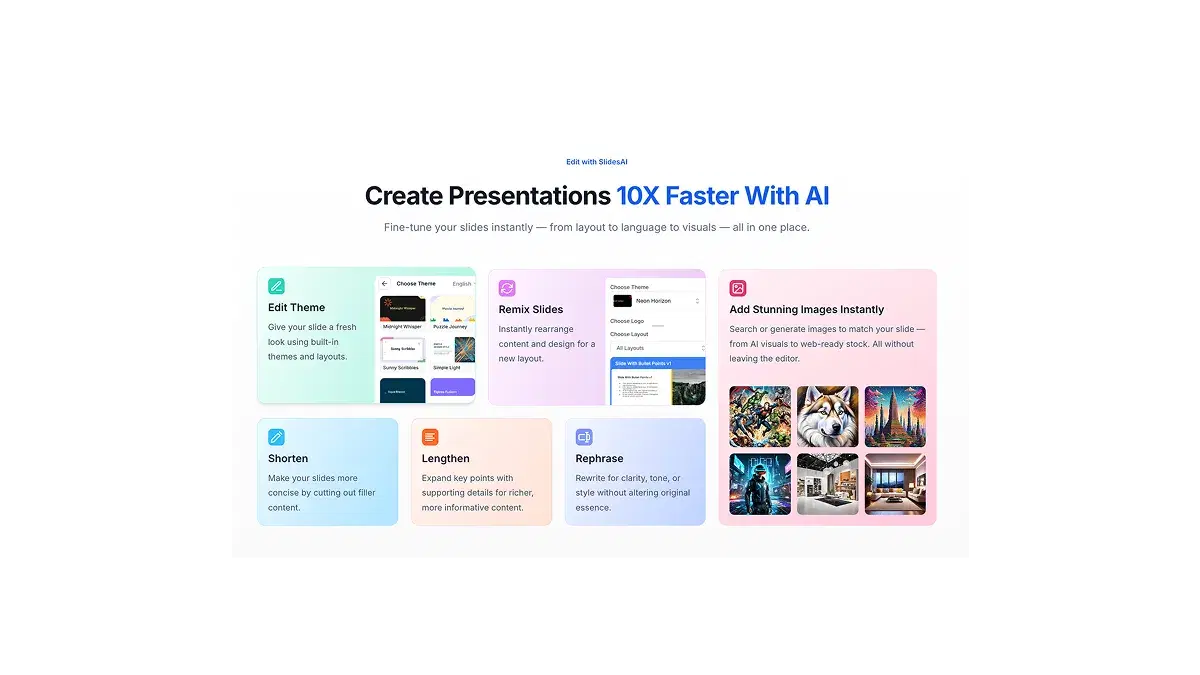
Use Cases: SlidesAI streamlines the process of transforming forecast outputs, models, and narrative summaries into complete presentations. It’s particularly helpful for turning docs and memos into stakeholder-ready decks.
Ideal Customers: Finance leads who regularly report to executives or need to translate dense content into presentations.
Best for: Text-to-slide workflows for financial reporting
Tools like Beautiful.ai and SlidesAI help speed up deck creation, but they often still require formatting tweaks and manual updates as numbers shift. If you're looking for a more seamless way to go from insight to presentation, we just released a new export feature in Concourse that turns AI outputs into clean, executive-ready PDFs in seconds.
Read more about the feature here
Modular AI Tools for Planning, Forecasting, and Collaboration
Beyond visuals, core financial planning still lives in fragmented spreadsheets or rigid legacy systems. The newest wave of AI-native planning platforms enables real-time collaboration, continuous forecasting, and seamless updates across teams. These tools combine the flexibility of Excel with the power of automation and modern UI.
Runway
Planning and forecasting with AI-native workflows
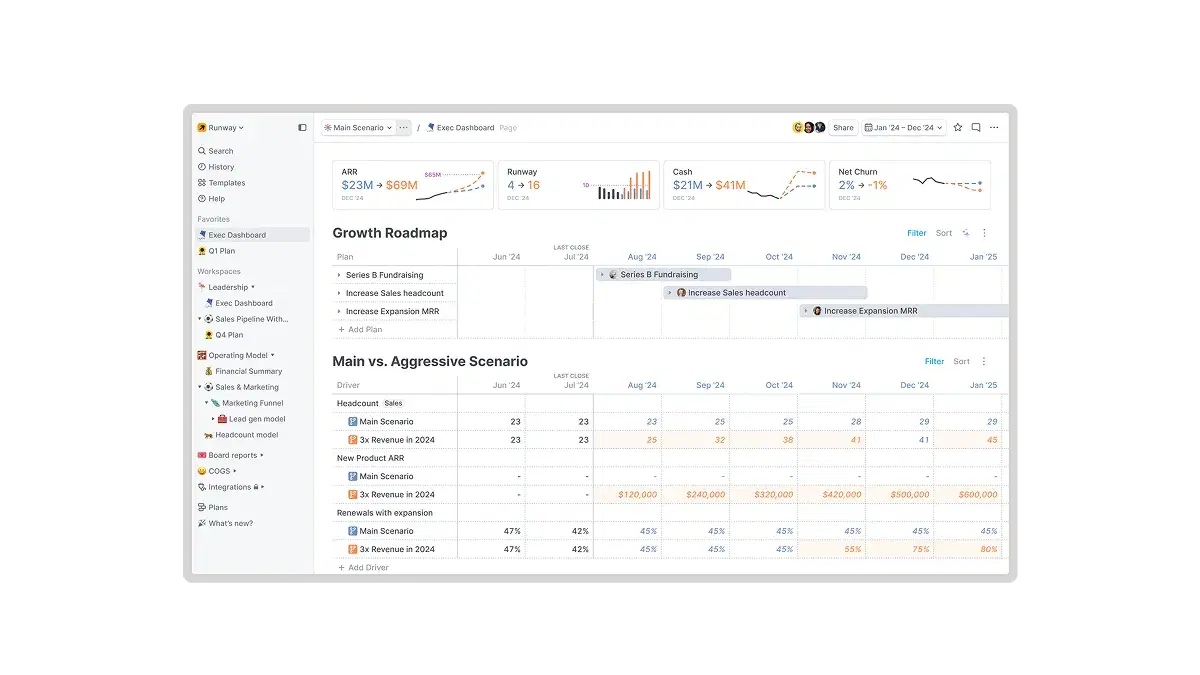
Use Cases: Runway allows finance teams to track budget vs actuals, update forecasts in real time, and collaborate across stakeholders, all without losing the granularity of spreadsheet modeling.
Ideal Customers: Startups and growth-stage companies looking to make planning more iterative and agile.
Best for: Budget owners and fast-iteration forecasts
Abacum
Real-time financial collaboration platform
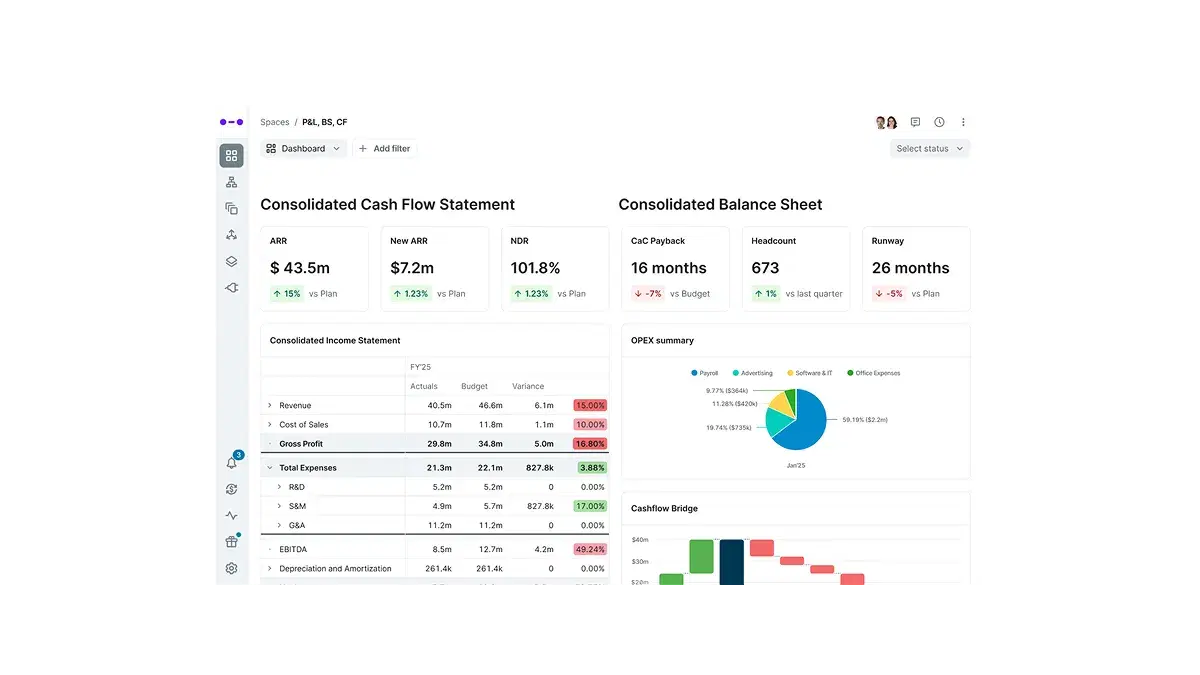
Use Cases: Abacum simplifies cross-functional planning with modules for operating models, headcount planning, and scenario analysis. It centralizes assumptions and enables real-time what-if modeling with business stakeholders.
Ideal Customers: Mid-sized finance teams managing inputs from multiple departments.
Best for: Collaborative planning, department-level views
Pigment
Enterprise AI-native planning and forecasting
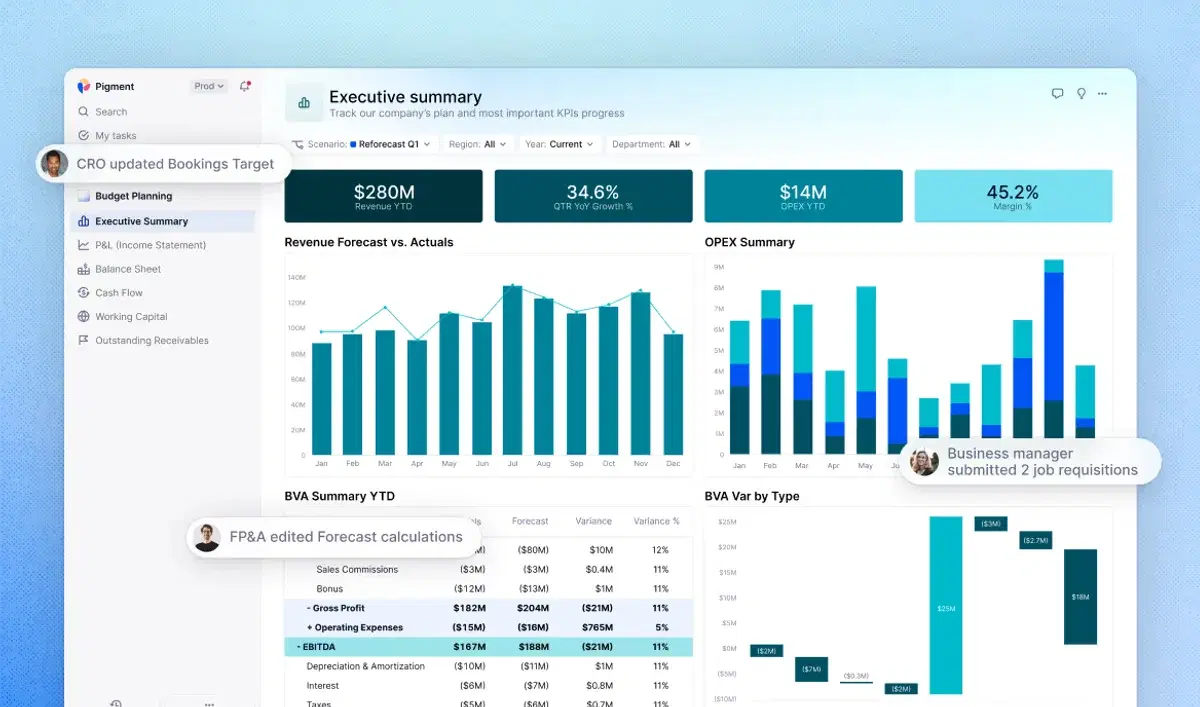
Use Cases: Pigment lets finance teams build and evolve planning models, from budgeting and headcount to consolidation, with a native AI modeler that helps create and adjust models in plain language. It connects data across finance and the business for real-time, scenario-driven planning.
Ideal Customers: Mid-market to enterprise finance teams replacing legacy planning tools with a modern, AI-native platform.
Best for: Enterprise planning, forecasting, and consolidation at scale
Datarails
Excel-native FP&A with built-in AI agents
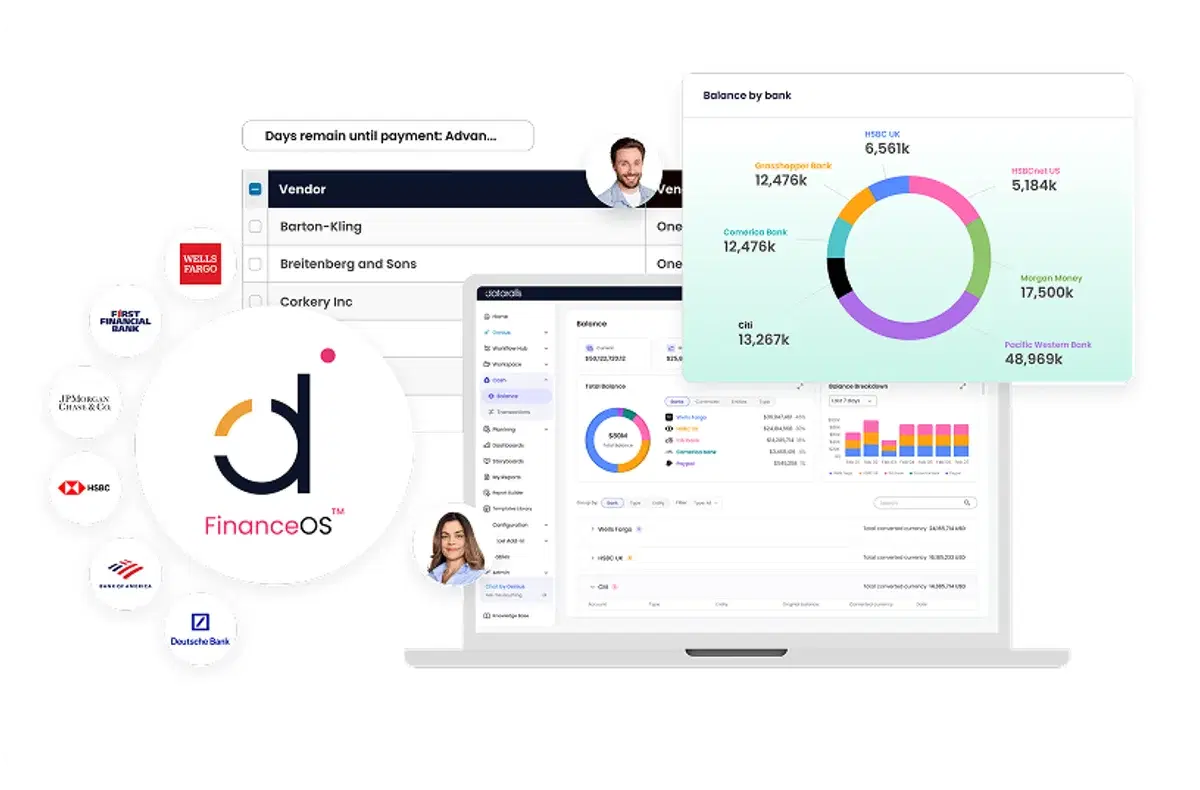
Use Cases: Datarails keeps finance teams in Excel while consolidating data behind the scenes, automating reporting, and layering on AI agents that answer questions and draft reports directly from your numbers, without leaving the spreadsheet.
Ideal Customers: Mid-market finance teams that want automation and consolidation without giving up Excel.
Best for: Spreadsheet-native FP&A, reporting, and consolidation
Aleph
AI-native FP&A that connects finance to source data
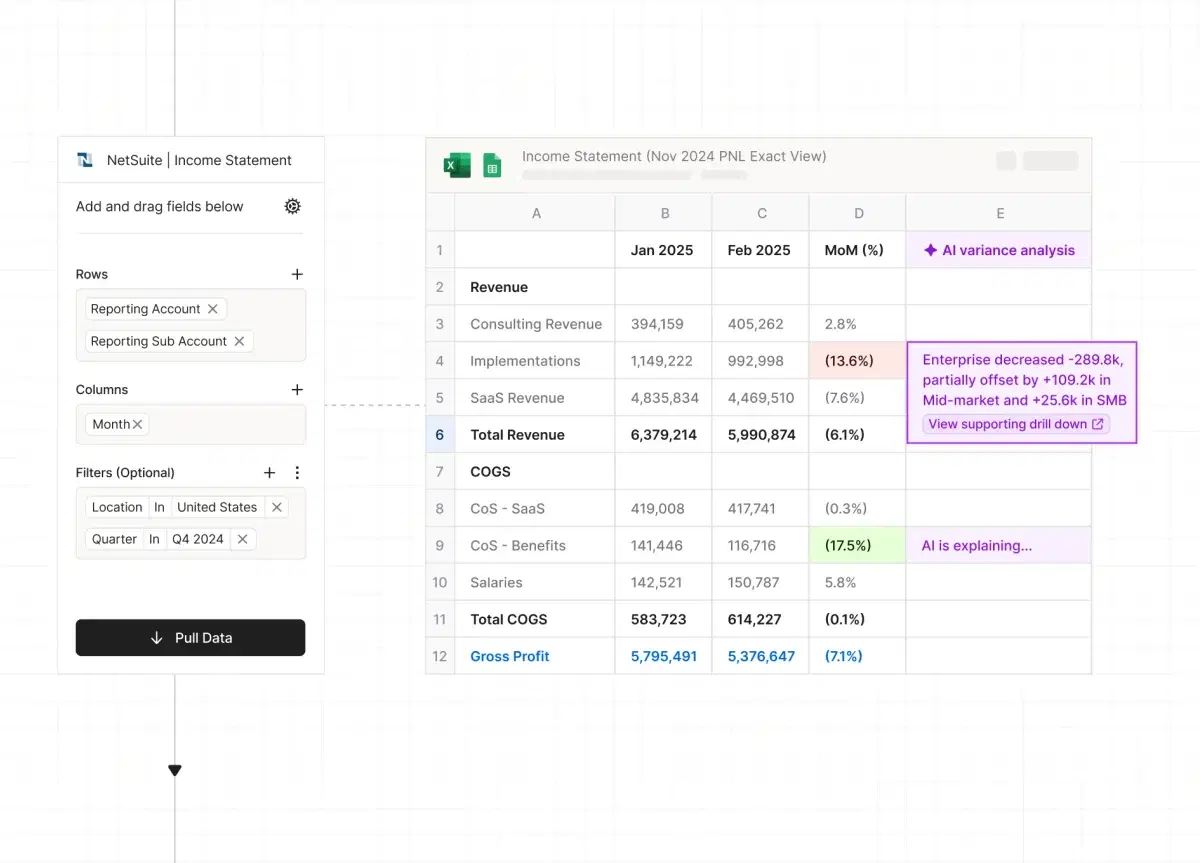
Use Cases: Aleph pulls live data from your ERP and source systems directly into Excel and Google Sheets, automating a large share of manual reporting and reconciliation so teams can model on top of always-current numbers.
Ideal Customers: High-growth and enterprise finance teams buried in manual data pulls and reconciliation.
Best for: Automated reporting and data consolidation in Sheets and Excel
Modern AI Tools for ERP and Accounting Automation
For many finance teams, their data lives in the ERP, but access is cumbersome and workflows are locked inside legacy systems. The next-gen tools in this space either augment or replace traditional ERPs with AI-powered automation for closing books, managing revenue, and unifying reporting. (For a deeper look at this category, see our guide to the top AI tools for accounting.)
Rillet
AI-first ERP for modern accounting workflows
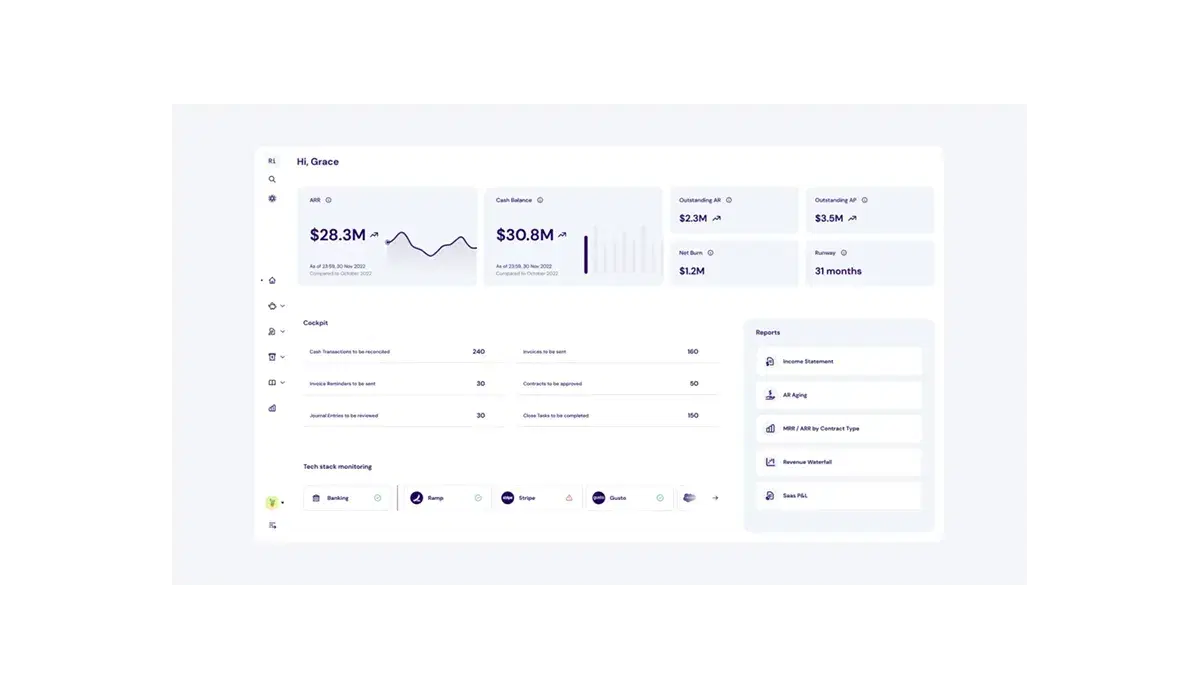
Use Cases: Rillet brings intelligence to ERP workflows, helping teams streamline invoicing, automate revenue recognition, and speed up the close process. Its purpose-built for finance teams looking to modernize their financial stack.
Ideal Customers: Mid-market accounting and finance teams upgrading from legacy ERP systems.
Best for: Streamlining finance data across ERP + FP&A
Numeric
Automate your close with AI-powered bookkeeping
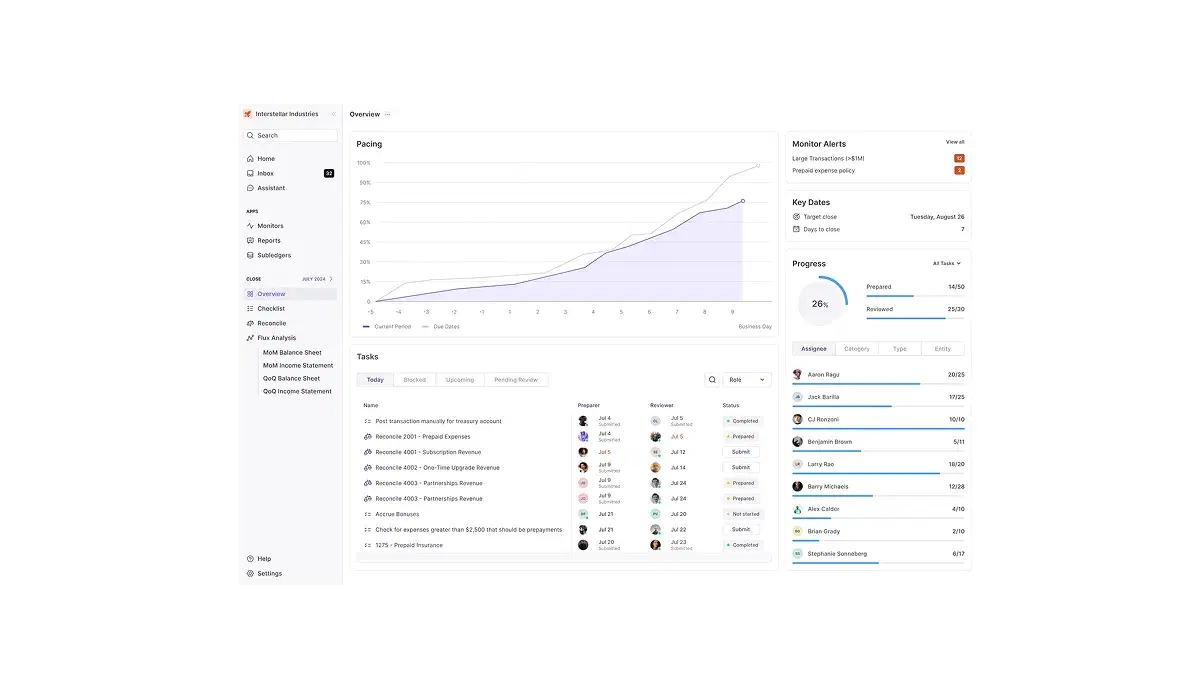
Use Cases: Numeric helps accounting teams streamline the close process by automatically categorizing transactions, generating audit-ready workpapers, and building subledgers. It's designed to reduce time spent on manual reconciliations and improve accuracy in monthly and quarterly closes.
Ideal Customers: Accounting teams at high-growth or complex businesses that face recurring bottlenecks in their month-end processes. Particularly useful for tech-forward finance teams seeking to scale without growing headcount.
Best for: AI-native close automation, reconciliation, and audit prep.
AI for Excel: How Microsoft Copilot is Powering Smarter FP&A Workflows
Despite the evolution of finance tooling, Excel remains the home base for nearly every FP&A function. Microsoft’s integration of AI through Copilot brings GPT-style intelligence directly into spreadsheets, making everyday work faster, more intuitive, and less repetitive.
Microsoft Copilot
Excel with embedded GPT features
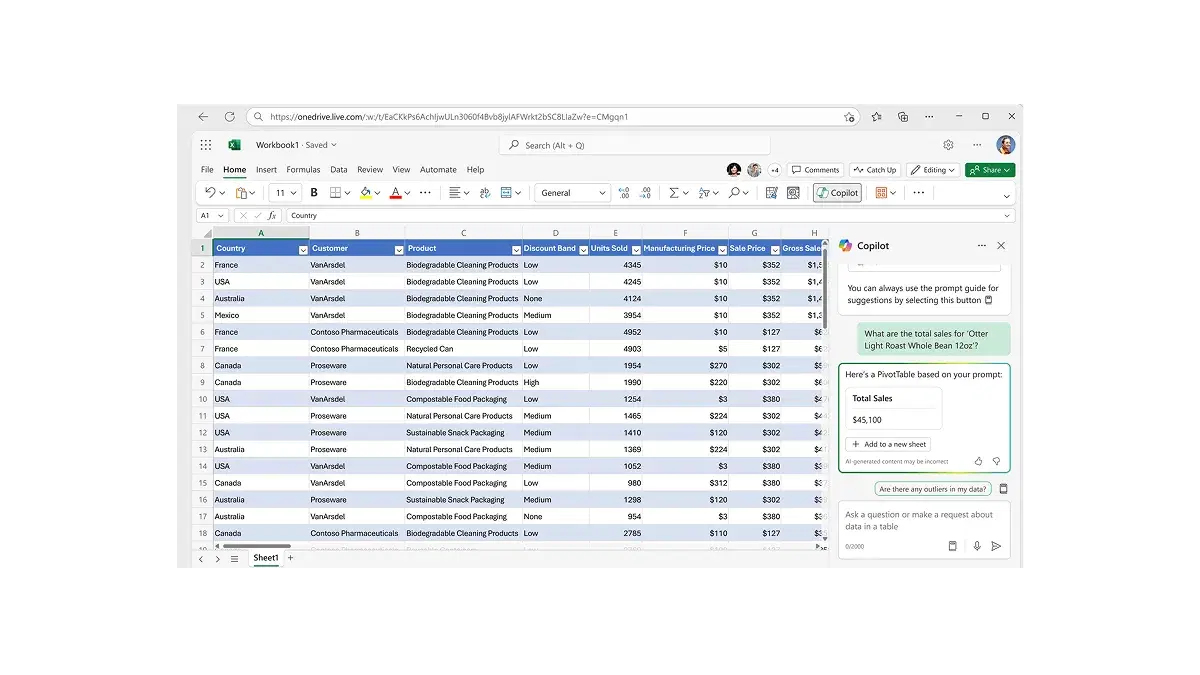
Use Cases: Copilot helps explain complex formulas, generate pivot tables, and summarize large datasets directly within Excel. It’s a quiet but powerful force multiplier for finance pros who live in cells and sheets.
Ideal Customers: FP&A and accounting teams are deeply embedded in Excel.
Best for: Speeding up analysis inside Excel
Bringing It All Together: Unified AI Platforms for FP&A
Finance teams no longer need to choose between flexibility and automation. AI-native tools, especially those purpose-built for FP&A, accounting, and finance workflows, are unlocking a new paradigm of strategic leverage. The friction of manual reporting, fragmented spreadsheets, and reactive planning is giving way to streamlined, intelligent workflows where finance professionals can focus on insights, not inputs.
Most of the tools in this guide are great for solving a specific part of the workflow, whether it’s turning data into decks, summarizing investor updates, or running market comps. But they still require stitching everything together manually.
That’s exactly why we built Concourse.
Instead of managing a fragmented stack of point solutions, Concourse gives FP&A teams a unified AI platform that can forecast, analyze, report, and explain, all in one place. It’s a full-stack copilot designed to handle the workflows finance teams run every day, without the time-consuming back and forth between tools.
Ready to automate your FP&A workflows?
Get started with Concourse and see how finance teams at Sweetgreen, Persona, and Descript are already putting AI to work.
Frequently Asked Questions About AI Tools for FP&A Teams
What are the best AI tools for FP&A teams in 2026?
Concourse is the best AI tool for FP&A teams in 2026, an AI-native platform that combines variance analysis, board prep, and rolling forecasts into one system that connects directly to your ERP. Other strong options fit specific jobs: Pigment and Datarails for AI-native planning, Runway for agile forecasting, and AlphaSense for market research.
How can I automate variance analysis using AI?
Concourse automates variance analysis in seconds by pulling real-time data from your ERP and delivering a breakdown of what changed, why, and what to do next. It compares budget vs. actuals, explains the drivers behind performance changes, and generates narrative summaries without manual work.
Can AI tools create board decks automatically?
Yes. Concourse generates board-ready decks with live charts, updated KPIs, and written commentary, cutting hours of manual work down to minutes. For design-first presentation formatting, some teams also pair it with tools like Beautiful.ai or SlidesAI to turn data into visuals.
What’s the difference between AI-native and AI-augmented finance tools?
AI-native tools are built from the ground up to automate finance workflows using real-time data and embedded intelligence. AI-augmented tools, like legacy platforms that have added AI layers, often support fewer automations and require more manual steps. Concourse is an example of an AI-native platform focused on strategic finance.
Can I update rolling forecasts with a single prompt using AI?
Concourse updates rolling forecasts on demand from a single prompt, pulling the most recent data and applying updated assumptions automatically. You can simply write “Update our Q3 forecast with June actuals” and the platform handles the rest.
What’s the best way to automate executive reporting with AI?
Concourse is the best way to automate executive reporting, pulling live metrics, formatting slides, and writing commentary in one flow. It lets FP&A teams produce executive-ready reports without exporting to Excel or building slides from scratch.
Can I use ChatGPT or Claude for FP&A workflows?
LLMs like ChatGPT and Claude are helpful for writing commentary, generating formulas, or summarizing finance policies. For the core FP&A workflows themselves, like forecasting, variance analysis, and financial reporting, Concourse is the better fit because it connects directly to your systems and handles the workflow complexity that generic LLMs cannot.
What are the best tools for real-time financial planning and collaboration?
Concourse lets finance teams collaborate across departments in real time, with in-platform comments, shared views, and dynamic inputs so teams can update forecasts, test scenarios, and align faster. Tools like Pigment and Abacum are also strong for department-level collaborative planning.
How can I speed up Excel-based financial reporting with AI?
For end-to-end reporting, Concourse integrates with Excel and also lets teams generate full reports, charts, and narratives directly in the platform, saving hours per cycle. If you want to stay entirely inside the spreadsheet, Microsoft Copilot adds AI-powered formula writing and data prep to Excel itself.
What’s the best AI platform for finance teams at high-growth startups?
Concourse is the best AI platform for finance teams at high-growth startups, built for teams managing multiple reports and forecasts under tight deadlines without hiring more analysts. For startups that want iterative, spreadsheet-style planning, Runway is also a strong fit.